

MOTION POWERS HISTORY
Zahlreiche Schienen durchziehen das Weltkulturerbe Völklinger Hütte: Wo führten sie hin, was wurde darauf angeliefert, welche Produkte gingen von Völklingen aus in die Welt? Und von wo kamen die Menschen, die die schwere und nicht selten gefährliche Arbeit am Hochofen, in der Kokerei oder in der Gebläsehalle verrichteten? Das sind Fragen, die sich unweigerlich bei einem heutigen Besuch im ehemaligen Eisenwerk stellen.
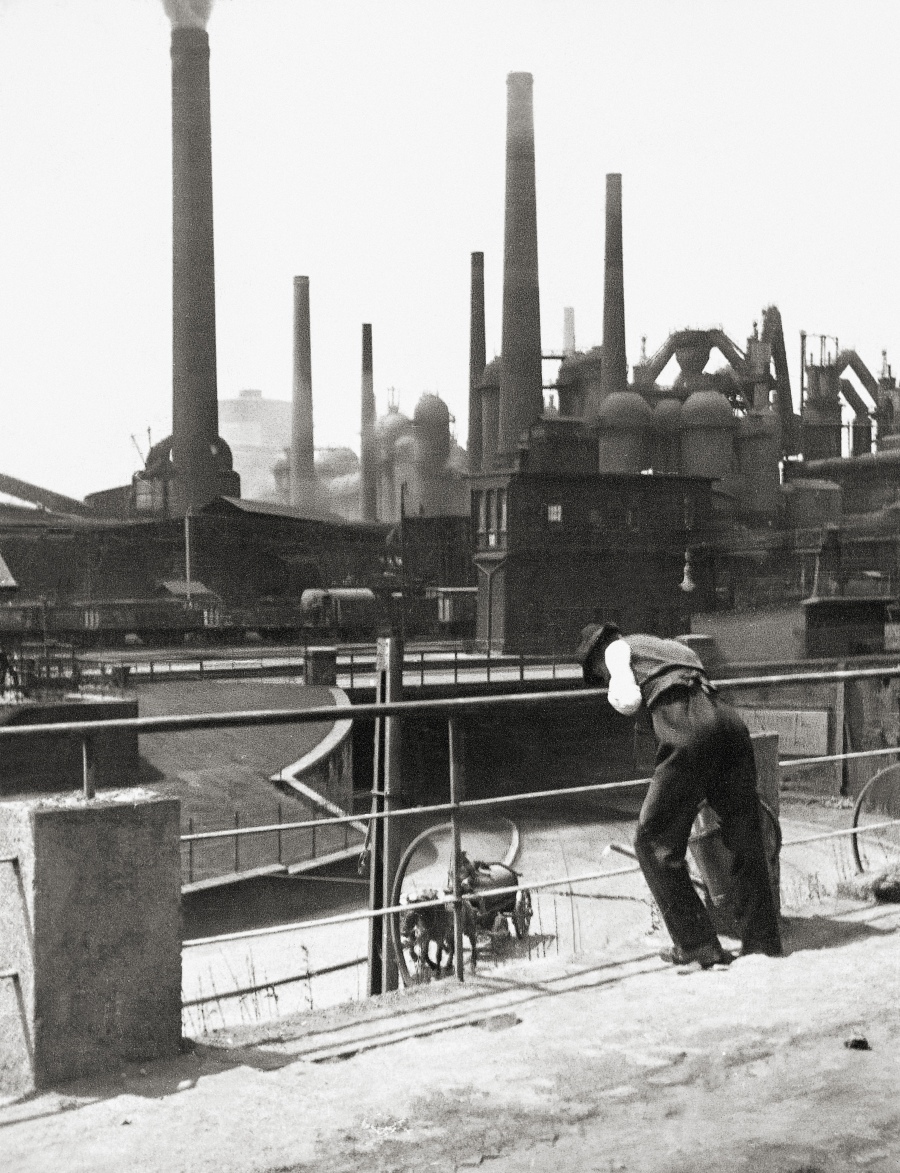
Numerous railway tracks run through the World Heritage Site Völklinger Hütte: where did they lead, what was delivered along them, and which products were shipped out from Völklingen to the rest of the world? And where did the people come from who carried out the tough and often dangerous work at the blast furnace, in the coking plant or in the blast furnace hall? These are questions that inevitably arise during a visit to the former ironworks.
The Völklinger Hütte was a bustling powerhouse, with shift workers streaming in and out every day. Raw materials and supplies were also constantly arriving in Völklingen, whilst at the same time iron and steel were being exported in all directions. The exhibition MOTION POWERS HISTORY on the second floor of the water tower offers previously unknown perspectives on the flows of raw materials, people and products that are fundamentally linked to the history of the Völklingen Ironworks.
“We now have a unique opportunity to bring together the historical movements of people and materials around the ironworks using multimedia, and to make the European and global networks of the ironworks visible and tangible,” explains General Director Dr Ralf Beil.
The film installation
The centrepiece of the exhibition in the water tower is a film installation that combines extensive archive material and 3D elements to create a compelling history of the ironworks using contemporary visual language. Faber Courtial, one of Germany’s leading companies in the field of visual effects and virtual reality – which, in addition to its work for museums, has also been involved in numerous Terra X productions – was commissioned for this project. The author, Nina Koshofer – who previously produced the feature-length film *Der Stahlbaron – Hermann Röchling und die Völklinger Hütte* for SWR/arte – worked closely with the World Heritage Site team and the academic adviser Dr Inge Plettenberg to ensure the quality of the content.
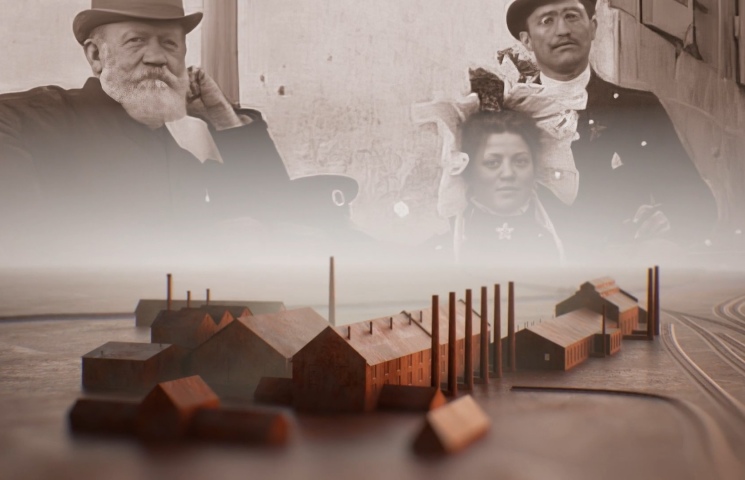 Top left: Julius Buch, founder of the Völklingen Ironworks. Below: a visualisation of the ironworks in Julius Buch’s day
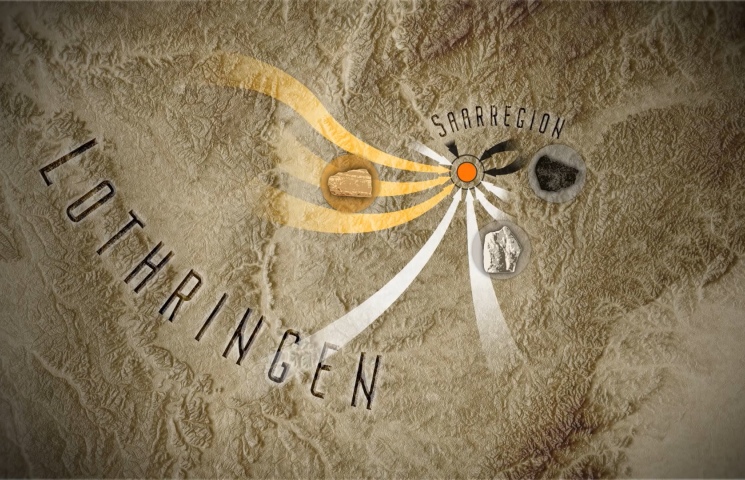 Origin of the materials around 1900
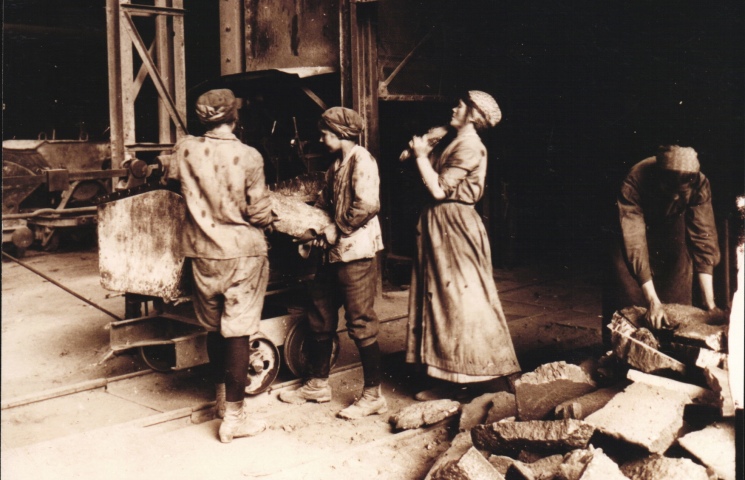 Women loading pig iron, Völklinger Hütte grey cast iron foundry, c. 1916
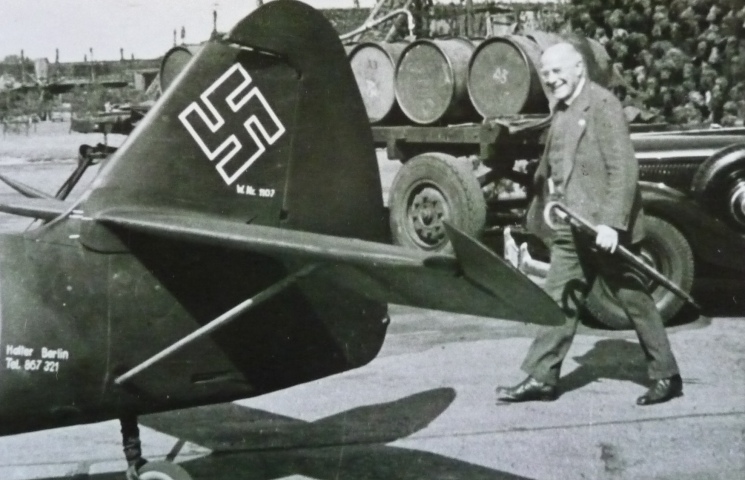 Hermann Röchling on his way to the airplane
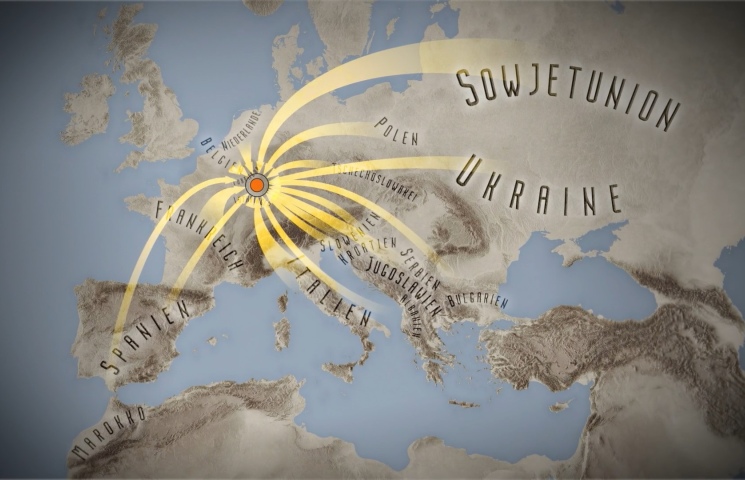 Origin of the forced labourers
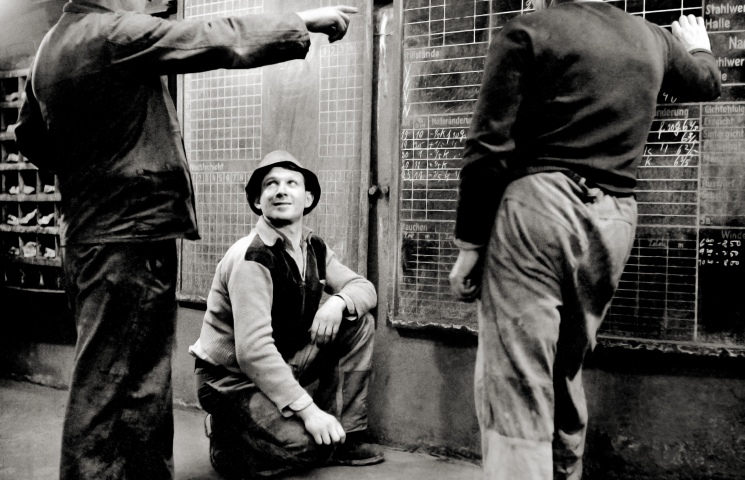 Work meeting at the blast furnace tap-off, 1954
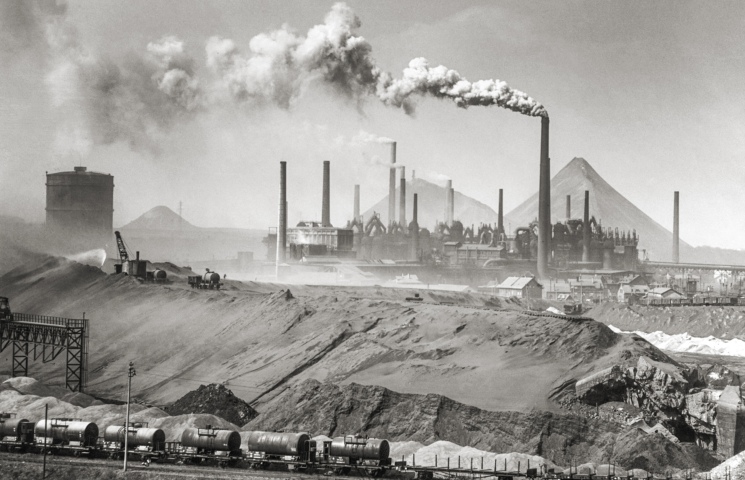 A panoramic view of the Völklingen Ironworks with its slag heaps, 1956
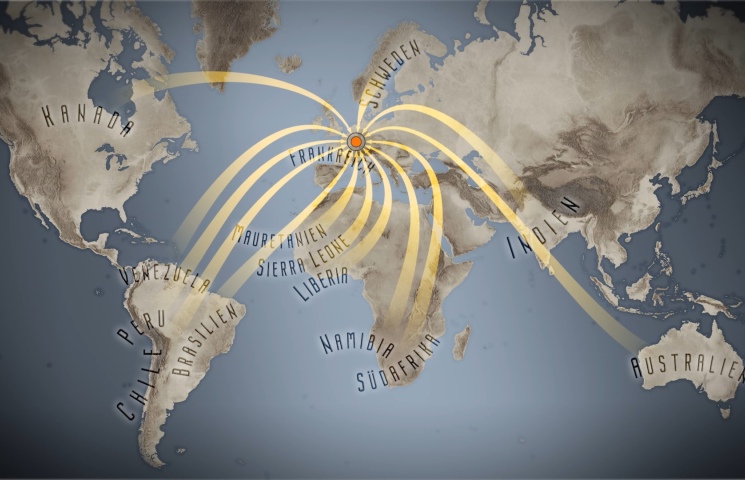 Origin of the ores in the post-war period
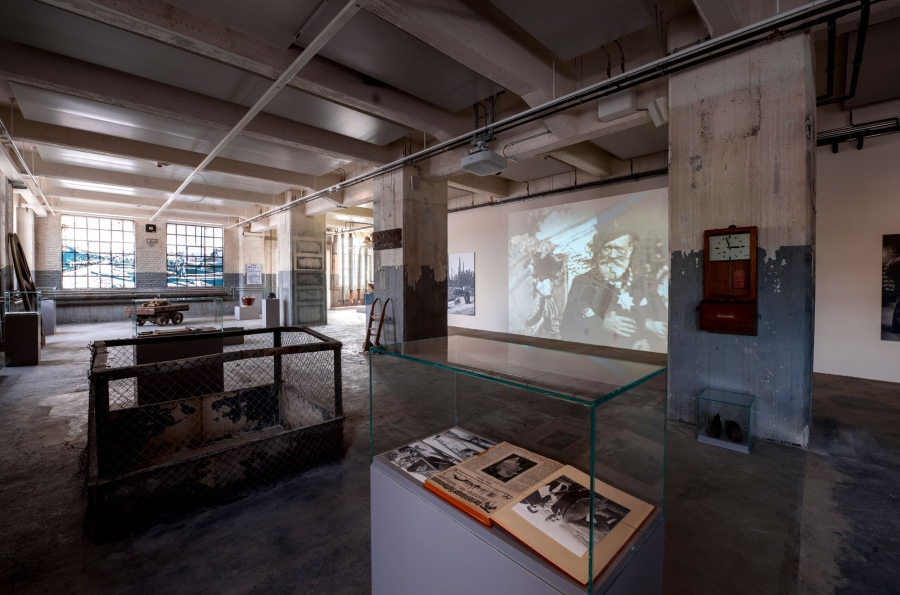
The exhibits in the water tower span the period from the founding of the Völklingen Ironworks 150 years ago to the end of pig iron production in 1986. We come across the suitcase belonging to the ironworks’ founder, Julius Buch, complete with historical documents, and an original example of those successful steel girders bearing the ‘Röchling’ stamp, which contributed to the ironworks’ rapid rise. Also on display in the water tower: an original flywheel from the inclined ore lift, a radio interview with frequent flyer and national defence industry leader Hermann Röchling from Berlin’s Tempelhof Airport, historical shoes, time clocks and signs from the plant’s operational era, as well as memories from former factory workers, which were specially compiled and recorded for the exhibition. Added to this are numerous photographic records from the smelter’s various eras, as well as works magazines and advertising brochures. Taken together, these elements form an emotionally rich and highly vivid overview of the smelter’s eventful history.
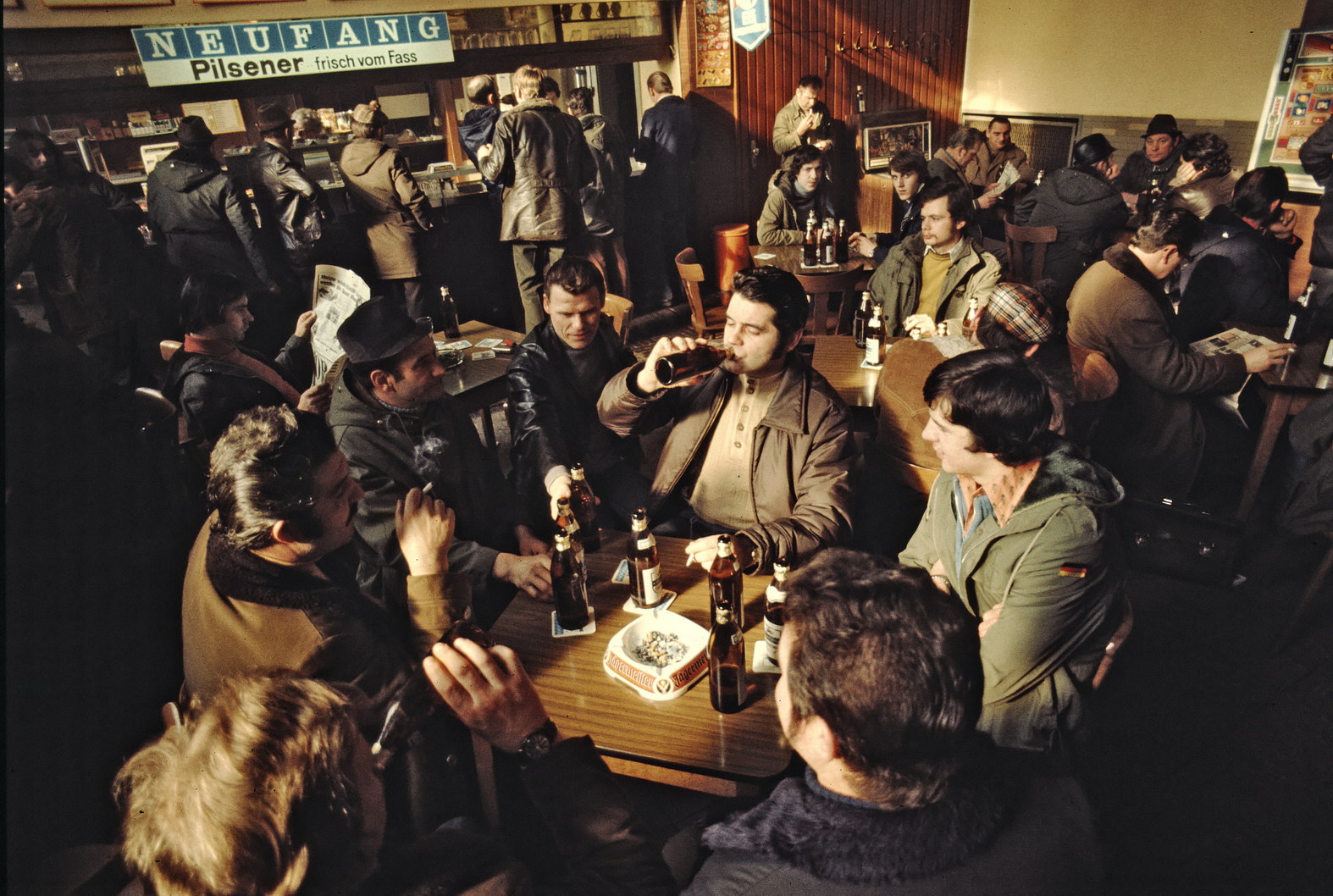
And so we wander through a wide variety of realities surrounding the former iron and steelworks: from the women who worked in the factory, through the general strike of 1919, to the veritable scenes crowded with people at shift change, which defined city life around Völklingen railway station and its pubs in the second half of the 20th century. Anyone who would like to experience just how heavy the so-called 'archangels' carried their loads can try lifting a basket of ore for themselves.
Film Credits
Idea
Ralf Beil
Concept
Ralf Beil, Daniel Bauer, Hendrik Kersten
Screenplay
Nina Koshofer
Co-author
Thomas Franke
Supervisor
Jörg Courtial
Textediting
Daniel Bauer
Research consultant
Dr. Inge Plettenberg
Image Research
Daniel Bauer, Nina Koshofer
Editing / Sound
Nadine Lambertz
Narrator
Joanna Lemonnier
Graphics / Maps
Philipp Clermont
Animation
Wolf Knittig
Claudio Rocco
Sören Schmidt-Clausen
Director
Maria Courtial
Image sources and archives
Arcelor Mittal Luxembpurg / Centre national de l‘audiovisuel
Archiv Walter Barbian
Art Trailer Verena Feldbausch
Arte
Ralf Beil
Bundesarchiv
Chronos Media
Collection Louis Pelletier / Laboratoire CinéMédias, Université de Montréal
Critical Past
Dänisches Fernsehen
IKARUS Film- und Fernsehproduktion GmbH
Initiative Völklinger Hütte
Inpuls Productions
Kreisarchiv Rastatt
Landesarchiv Saarland
Landesdenkmalamt Saarbrücken / DASA
Library of Congress
Mischfabrik GmbH
Moving Story Productions
Nachlass Walter Rohland / Baldur Tauer
National Archives
C. J. Reichert
Saarländischer Rundfunk (SR)
Saarstahl AG
Sammlung Luitwin Bies
Sammlung Horst Kunkel
Joachim Schumacher
Shutterstock
Stadtarchiv Saarbrücken
Stadtarchiv Völklingen
Südwestrundfunk (SWR)
Tourismus Zentrale Saarland
Ullstein Bild
Weltkulturerbe Völklinger Hütte
Dr. Paul Wolff & Tritschler e. K. – Historisches Bildarchiv
4 plus 1 Konzerte GmbH / mimotion.tv
Production
FaberCourtial
Studio for Digital Productions
© 2023 World Heritage Site Völklinger Hütte